How fast can disaster relief sanitation get set up in Salt Lake City?
Speed depends on road access and how many units the situation needs. A single-family flood response might need one standard porta potty rental and a handwash station. A multi-block outage after a water main failure needs a coordinated drop of units, and that takes a little longer to route trucks and confirm placement. Salt Lake City sits at the center of a service radius that includes South Salt Lake 7.9 miles south, Bountiful 9.9 miles northeast, and Murray 11.6 miles south, so equipment already staged near those areas can reach a disaster zone fast. For anything urgent, the emergency porta potty rental page has the process laid out. Crews follow the same sanitation baseline used on construction sites: OSHA 1926.51(c) sets toilet counts by headcount, one unit for every 20 workers or displaced residents grouped at a relief point, scaling up from there. Water access matters just as much. OSHA 1926.51(a)(1) requires an adequate supply of potable water at any staffed site, which is why handwash stations go out with every deployment, not as an afterthought. If people are sheltering in place without running water, a handwashing station rental or a portable sink rental covers that gap immediately, and 29 CFR 1910.141(d)2 requires soap and towels at that station, not just a bottle of sanitizer.
What kind of sanitation equipment works best for a disaster response?
It depends on the damage. A short-term outage of a day or two usually calls for standard units, priced in the same range covered on the porta potty rental cost page. A shelter running for a week or more benefits from a restroom trailer rental, especially a 2 stall restroom trailer or 4 stall restroom trailer if the population is larger. Trailers also solve the access problem for anyone who cannot use a step-up unit: ADA Standards 213.2 requires that at least 5 percent of a cluster of single-user toilets be accessible, and the ADA accessible porta potty meets that with a 60 inch turning circle under ADA Standards 304.3.1. Septic systems fail during floods too. If a home's tank backs up or a line breaks, emergency septic service can pump and haul while repairs happen, and holding tank rental bridges the gap for a household with no working system at all. Storage is often overlooked in a disaster plan. Displaced families and relief crews both need somewhere to secure supplies, and a storage container rental or mobile office trailer rental can serve as a command post or a place to keep donated goods dry. Where debris removal is part of the response, a roll-off dumpster rental clears storm debris fast, and OSHA 1926.25 requires that debris be cleared from active work areas regardless of the cause.
Does disaster relief sanitation cost more than a standard rental?
Not necessarily. Pricing follows the same bands as any short-term rental in Salt Lake City, and there is no separate disaster surcharge built into the rate sheet.
| unit | duration | typical | notes |
|---|---|---|---|
| standard | day | 150 | short-notice single unit |
| standard | weekend | 250 | multi-day outage coverage |
| ada | day | 230 | accessible unit, single day |
| trailer | weekend | 2000 | multi-stall, extended shelter use |
| septic | day | 250 | pump-out or emergency haul |
Delivery timing can affect the fee more than the unit itself. A porta potty rental per day quote assumes normal routing, but rush delivery into a closed or flooded road may carry the higher end of the delivery fee band. For a longer relief operation, a monthly porta potty rental rate often works out cheaper per day than repeated short bookings. If temporary fencing is needed to secure a damaged structure or a staging area, see temporary fence rental and temporary fence cost for what that adds. Lighting matters after dark too, particularly around collapsed structures or debris piles, and a light tower rental paired with a temporary power pole keeps a site visible and workable at night. General guidance on unit counts for any scale of response is on how many porta potties do I need.
Can Salt Lake City Porta Pros deploy the same day a disaster happens?
Same-day deployment is possible depending on truck availability and road access. Call as early as conditions allow. Crews prioritize occupied shelters and active work zones first, then expand coverage as more units arrive on site.
What if the property has no running water at all?
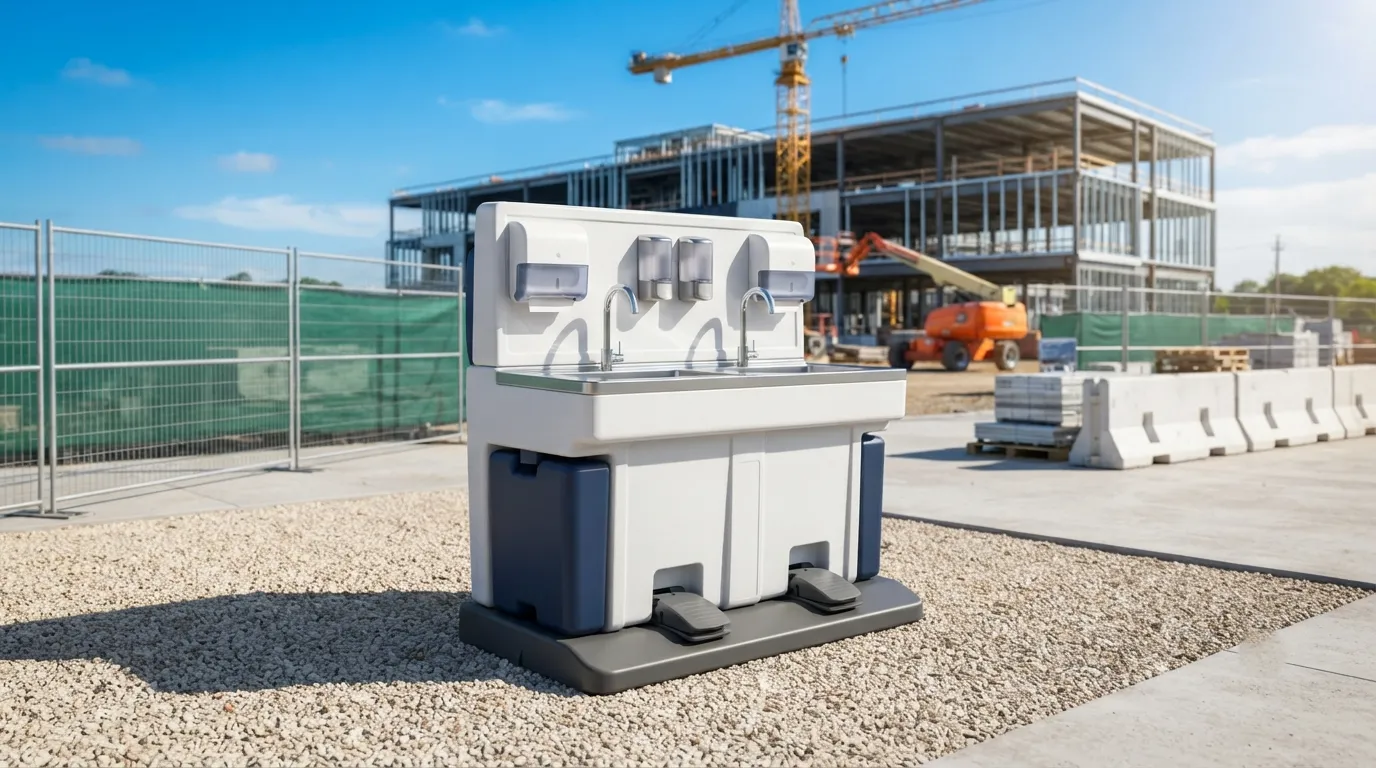
A handwashing station rental solves that immediately, since OSHA 1926.51(a)(1) requires potable water at any staffed site. Portable sinks pair well with standard toilets when the main water line is down for days.
Do disaster relief units meet ADA requirements?
Yes. Accessible units follow ADA Standards 213.2 and 304.3.1, covering placement ratio and turning space. Request an ADA unit up front so it arrives with the first wave of equipment, not as an add-on later.
How long can equipment stay on site during a longer recovery?
As long as needed. Many recovery operations run weeks or months, and rates shift toward the monthly porta potty rental tier once the job passes the multi-week mark.
Can debris and sanitation be handled by the same company?
Yes. Salt Lake City Porta Pros handles both through roll-off dumpster rental and the full sanitation lineup, so one call covers toilets, water access and debris hauling together.
Next step
Get a delivery date
Tell us the address, the dates and the headcount. We size the order and confirm the route.