
What OSHA actually requires for handwashing on a job site?
The trigger is the work, not the industry label. OSHA 1926.51(f)(1) requires washing facilities specifically where workers apply paints, coatings, herbicides or insecticides, or handle other harmful contaminants. It's not a blanket handwashing mandate for every construction site in Salt Lake City. If your crew is framing and pouring concrete with no chemical exposure, that clause does not apply. Once someone breaks out a sprayer, it does. Separately, 1926.51(c)(1) sets the toilet ratio: 1 facility for 20 workers or fewer, scaling up from there. General industry sites, as opposed to construction, fall under 1910.141(c)(1)(i) instead. Farm operations have their own standard: OSHA 1928.110 requires potable water, toilets, and handwashing within a quarter mile walk for hand-labor employees, at one facility per 20 people. If you're staffing an orchard crew or a hay crew outside the city, check farm and agricultural restrooms for how that pairs with sanitation. For general job-site sanitation questions beyond handwashing, OSHA portable toilet requirements covers the toilet side, and handwashing station rental covers what we actually deliver.
Why do hand sanitizer stations not count as compliance?
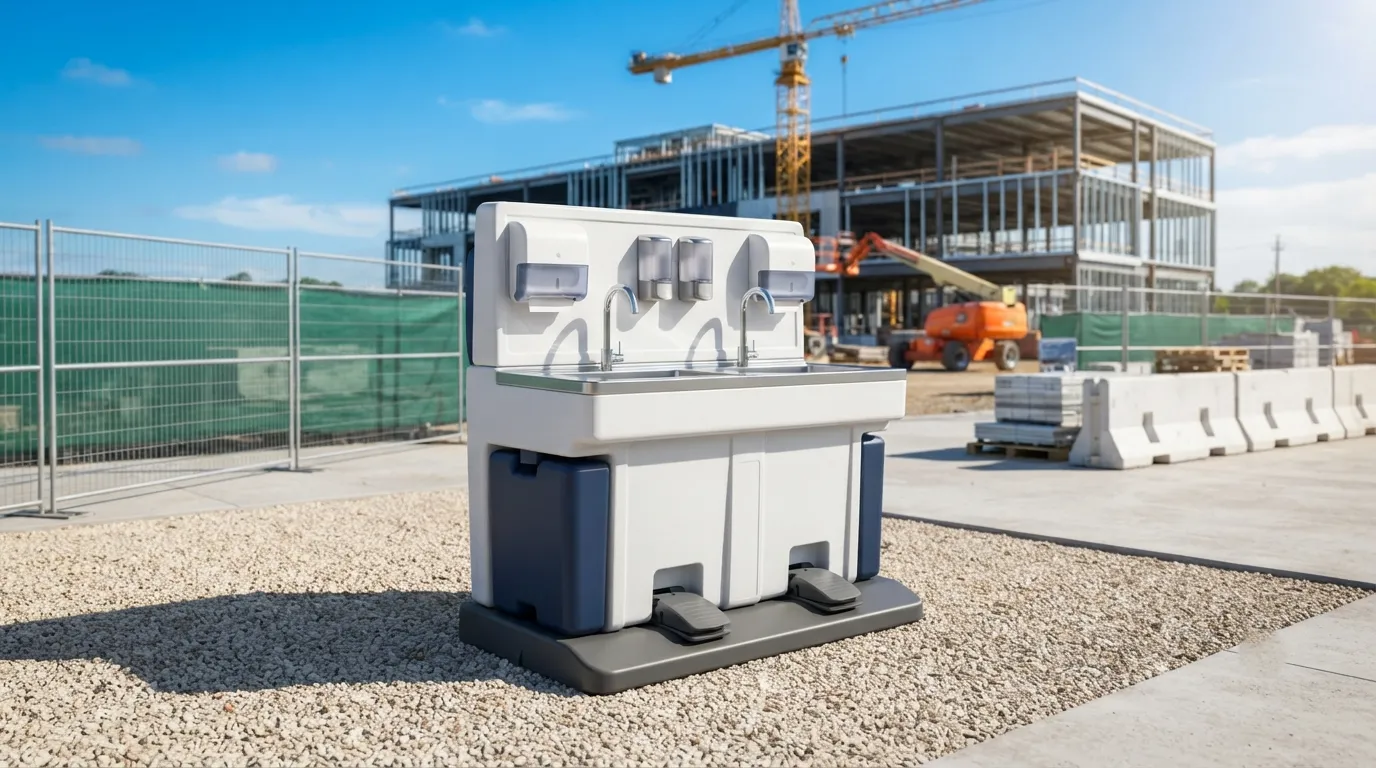
Because the standard names soap and a drying method, not gel. 29 CFR 1910.141(d)(2) is specific: washing facilities need soap and either towels or a hand-drying device. A wall-mounted sanitizer dispenser is a fine supplement, and we rent those too through hand sanitizer station rental, but it doesn't replace a real sink. If an inspector walks a Salt Lake City site and finds sanitizer bottles and nothing else, that's a gap. Our portable sink rental units carry fresh water, a soap dispenser, and paper towels, which is the combination the rule actually asks for. Pair a sink with your standard porta potty rental units and you've covered both the toilet ratio and the wash requirement in one delivery. This matters most on paint crews, landscaping outfits running herbicide, and any subcontractor doing surface coatings, since those are the exact activities 1926.51(f)(1) names.
How many handwashing stations does a Salt Lake City job site need?
There's no fixed handwashing headcount in the OSHA table the way there is for toilets, but the practical answer follows crew size and layout. A site with a couple dozen workers and one contaminant-triggering task usually runs fine with one or two stations placed near the work zone, not clustered by the porta potties across the lot. Bigger sites, or ones spread across multiple building pads, need a station near each active zone so nobody's walking 200 feet to wash up before a break. If you're also renting an ADA accessible porta potty, remember ADA Standards 213.2 requires at least 5 percent of clustered single-user units to be accessible, and that reach-and-clearance logic carries over to accessible sink placement too, per ADA Standards 308.2.1 on forward reach limits. For crews trying to size the whole layout at once, how many porta potties do I need walks through the toilet math that pairs with this.
Do special events and food vendors need different handwashing setups?
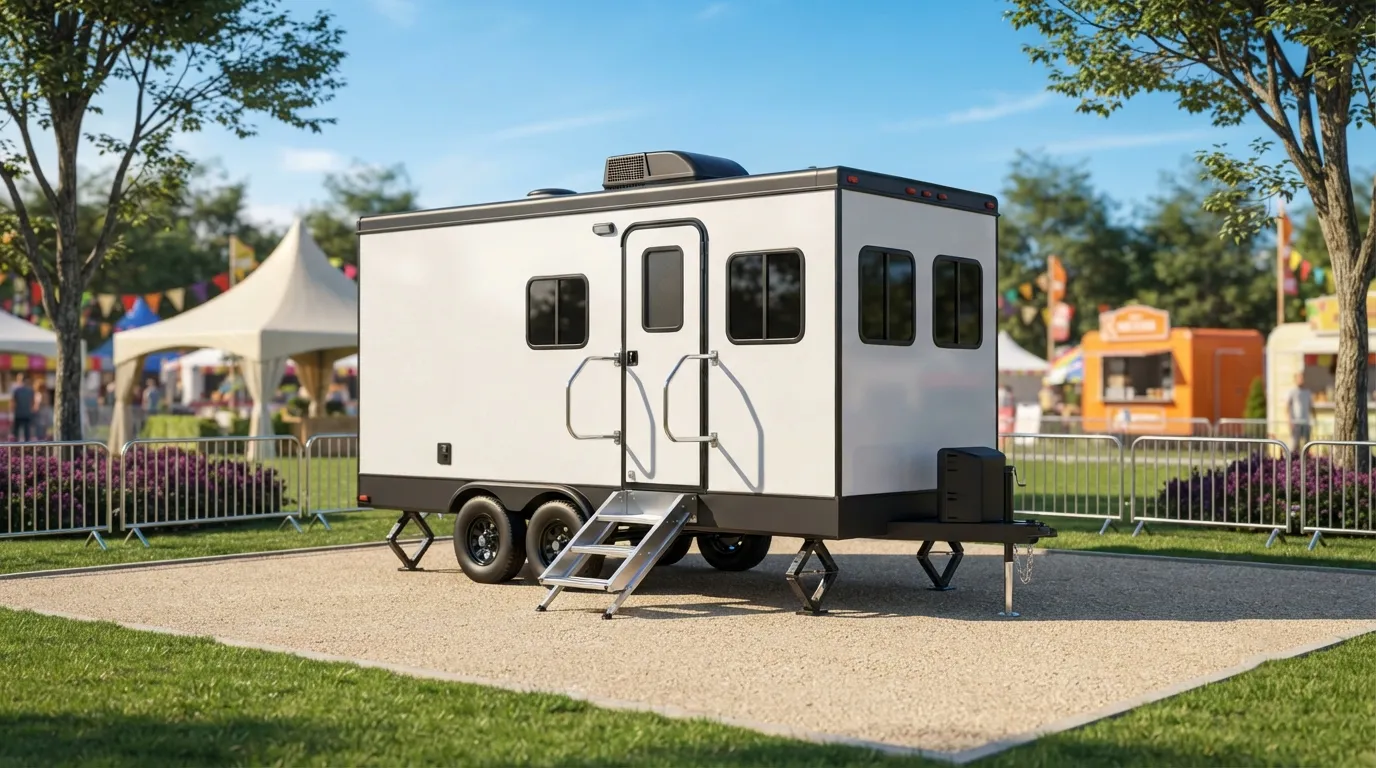
Yes, mostly because food handling adds its own expectations on top of the construction rules. A wedding at a venue near South Salt Lake, 7.9 miles south of Salt Lake City, or a festival vendor row, needs stations positioned at food prep and serving points, not just near the restrooms. Event organizers running anything with a concession stand should treat handwashing as a food-safety line item, separate from the general guest restroom count covered on event restroom rental. We deliver the same soap-and-towel sink units for wedding restroom rental and festival restroom rental bookings, sized to vendor count rather than guest count. If your event runs food trucks, plan on a station per truck cluster, not one for the whole lot. County fairs and farmers market layouts, see county fair restrooms, tend to need the most units simply because vendor booths are spread the widest.
| unit | duration | low | typical | high |
|---|---|---|---|---|
| standard | day | 100 | 150 | 350 |
| standard | week | 130 | 200 | 500 |
| standard | month | 125 | 200 | 325 |
| delivery_fee | day | 100 | 150 | 500 |
Placement in the public right of way in Salt Lake City needs confirming with the city before delivery. We don't guess at that one; check with the municipal permit office directly, and see porta potty permit requirements for the general framework while you sort it out. Renovation crews working residential jobs closer to Millcreek, 12.5 miles southeast of Salt Lake City, run into the same right-of-way question on narrow streets.
Does hand sanitizer satisfy OSHA handwashing rules?
No. 29 CFR 1910.141(d)(2) requires soap and towels or a drying device. Sanitizer works as a backup between washes, not as the primary facility. If your site only has sanitizer stations, add a real sink before an inspection, especially on jobs covered by 1926.51(f)(1).
What triggers the OSHA washing facility rule on a construction site?
Applying paints, coatings, herbicides, or insecticides, or working around similar contaminants, per 1926.51(f)(1). General framing or concrete work doesn't automatically trigger it. Once chemical exposure starts, a washing station becomes necessary at that work zone.
Can one handwashing station serve multiple porta potties?
Usually, yes, for a compact cluster. Larger or spread-out sites do better with a station per zone instead of one central point. Walking distance matters more than the exact station count when workers are on a deadline.
Is potable water required at every job site?
Yes. OSHA 1926.51(a)(1) requires an adequate supply of potable water at all places of employment. That's separate from the handwashing sink itself, but the two usually get delivered together on our routes.
How far will Salt Lake City Porta Pros deliver a handwashing station?
We serve Salt Lake City and drive out to towns like Bountiful, 9.9 miles northeast, and Taylorsville, 10.9 miles south. Delivery fees vary by distance and duration, so ask when you request a quote.
Next step
Get a delivery date
Tell us the address, the dates and the headcount. We size the order and confirm the route.