
How many restrooms does a county fair need?
Fair crowds spike hard around livestock judging, food vendors and evening entertainment, so counting heads at the gate undersells what you need at 7pm. A good rule: figure your peak hour, not your daily total, then work backward. If you expect 3,000 people through the gate with half there during the peak two hours, that is closer to a concert crowd than a quiet afternoon market. Our how many porta potties do i need guide walks through the math event by event, and it is worth doing before you order.
OSHA 1926.51(c) sets ratios for construction crews, not fairgoers, but fair organizers in Salt Lake City still use it as a sanity check because it is the only published toilet-to-person ratio most cities recognize. For public events, ADA Standards section 213.2 matters more: where you cluster single-user units, at least 5 percent must be accessible, never fewer than one. A fair with ten standard porta potty rental units needs at least one ada accessible porta potty in that group, and the accessible route to it needs a 36 inch clear width under ADA section 403.5.1.
Layout matters as much as count. Spread units across the fairgrounds near the midway, the grandstand and the livestock barns instead of clustering everything at one entrance. Our porta potty placement guide covers ground clearance, service truck access and how far units can sit from a water source.
What restroom options work best for a county fair?
Most fairs mix standard units for general crowds with something nicer near VIP areas, sponsor tents or the beer garden. A deluxe flushable porta potty gives fair boards a step up in comfort without renting a full trailer, and it still delivers in a day if the fair gets a late attendance bump. For multi-day fairs with grandstand concerts or rodeo finals, a restroom trailer rental handles heavier traffic with less line backup than single units alone.
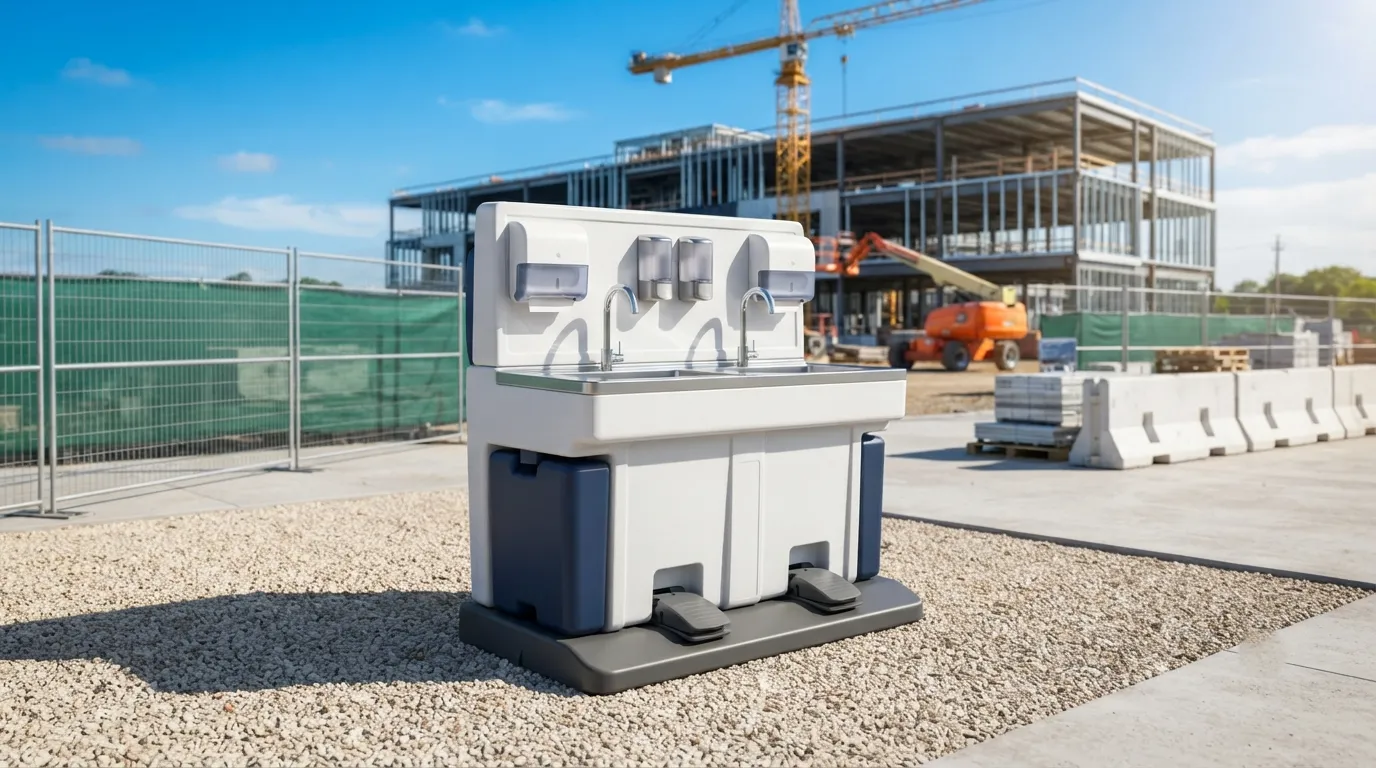
Smaller fairs or single-evening events often do fine with a 2 stall restroom trailer, while a full weekend fair with multiple stages leans toward a 4 stall restroom trailer or larger. If your fair runs food trucks or a beer garden, pair restrooms with a handwashing station rental near the food court; 29 CFR 1910.141(d)(2) requires soap and towels or a hand-drying device at wash stations, not sanitizer alone, so plan for that if a vendor coordinator asks.
Fairgrounds vendors handling food prep sometimes need washing facilities under OSHA 1926.51(f)(1), which applies specifically where workers handle paints, coatings, herbicides or insecticides, so it is not the right citation for food service. For general vendor sanitation, OSHA 1926.51(c) and the fair's own vendor rules will govern instead. If your fair also runs a demolition derby or teardown crew, a roll-off dumpster rental or two keeps debris off the midway between events.
When should a fair book restroom rentals?
Book 60 to 90 days ahead for a Salt Lake City county fair, especially if it overlaps other summer events pulling from the same rental fleet. Fairs booked close to Bountiful, 9.9 miles northeast, or Layton, 24.7 miles north, compete for the same trailers and standard units during peak fair season, so early booking protects your date. A request a quote submitted with your expected attendance and site map speeds up the planning call.
Pricing depends on unit type and rental length. Here is what a multi-day fair typically pays across the units most fair boards order:
| Unit | Duration | Typical Price |
|---|---|---|
| Standard unit | Weekend | $250 |
| Standard unit | Event | $400 |
| ADA unit | Weekend | $240 |
| Deluxe flushable | Weekend | around $250 |
| Restroom trailer | Event | $3,500 |
Delivery fees run separately and depend on distance and access; see porta potty rental cost for a fuller breakdown. If your fairgrounds site sits near South Salt Lake, 7.9 miles south, or Murray, 11.6 miles south, delivery logistics are usually straightforward since both sit inside typical service range. For fairs needing crowd lanes near the grandstand or livestock area, a temporary fence rental or crowd control barrier rental helps keep restroom lines orderly.
Do county fairs need ADA-compliant restrooms?
Yes. ADA Standards section 213.2 requires at least 5 percent of clustered single-user units be accessible, with a minimum of one. Accessible units also need a 32 inch clear door opening under section 404.2.3 and a 60 inch turning circle inside per section 304.3.1. See ada restroom requirements for the full list.
How far in advance should we reserve restrooms for a fair?
Aim for 60 to 90 days before a Salt Lake City fair, longer if your dates overlap other regional events. Restroom trailers and ADA units book out first since they have smaller fleets. Submit a request a quote early with attendance estimates and a site layout.
Can we rent handwashing stations separately from restrooms?
Yes. Many fairs order handwashing station rental units separately for food courts and livestock barns. Wash stations need soap and towels or a hand-drying device under 29 CFR 1910.141(d)(2); hand sanitizer alone does not meet that standard.
What if our fair runs multiple days with heavy evening crowds?
Consider a restroom trailer instead of stacking more standard units. A 4 stall restroom trailer or 8 stall restroom trailer handles concentrated evening traffic during concerts or rodeo events better than scattered single units, and it cuts line time significantly.
Do we need permits for restroom placement on fairgrounds?
Placement in a public right of way or municipal lot needs confirming with the city; this varies by venue and is not something to guess on. Check our porta potty permit requirements page, then confirm directly with Salt Lake City before finalizing your site plan.
Next step
Get a delivery date
Tell us the address, the dates and the headcount. We size the order and confirm the route.