
How many restrooms does a farm operation need?
Start with headcount, then check the walk distance. OSHA 1928.110 sets the ratio at one facility per 20 hand-labor employees, and that unit has to sit within a quarter mile of wherever people are actually working the field. A five-acre orchard with six pickers needs one unit placed near the rows, not back at the barn. A larger operation spread across multiple fields may need two or three units moved as the crew moves, which is common during harvest. Standard porta potty rental covers most farm jobs, since the unit carries a 60 to 70 gallon holding tank and stands about 92 inches tall, easy to set on gravel or a mowed pad. If you are not sure where to start, how many porta potties do I need walks through the math by crew size. Seasonal harvest work in Salt Lake City often means bringing on temporary labor fast, and a portable toilet rental can be delivered same week in most cases. For bigger operations running packing sheds or wash stations alongside the fields, pair the toilets with a handwashing station rental since OSHA 1928.110 calls out handwashing separately from the toilet count.
What about water access and handwashing on a working farm?
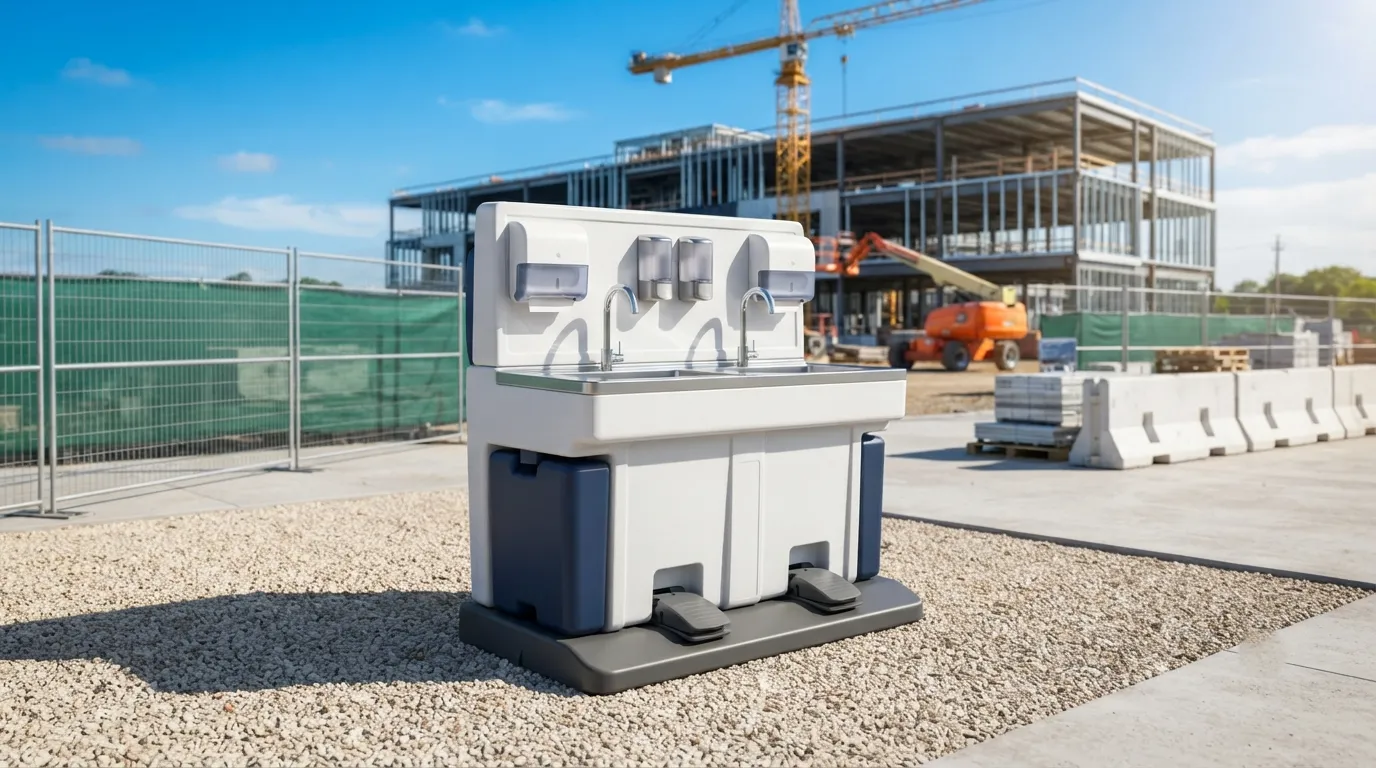
Potable water has to be part of the setup, not an afterthought. OSHA 1928.110 requires potable water for hand-labor employees alongside the toilets, and 29 CFR 1910.141(d)(2) requires soap and towels or a hand drying device at any washing facility, meaning a bottle of sanitizer on a fence post does not satisfy the requirement. Salt Lake City operations that spray, coat or treat crops with herbicides or insecticides have an added duty under OSHA 1926.51(f)(1), which specifically requires washing facilities where those chemicals are in use. A portable sink rental with a fresh water tank and soap dispenser handles both requirements at once. If your crew is smaller and mobile, a hand sanitizer station rental is a supplement, not a substitute, for real handwashing under 1910.141(d)(2). Farms running a bunkhouse or seasonal housing sometimes also need septic support. A septic pumping service or septic tank cleaning keeps a residential-scale tank running through harvest, and a typical tank is pumped every 3 to 5 years depending on size and household load. Farms closer to Bountiful, 9.9 miles northeast of Salt Lake City, or Taylorsville, 10.9 miles south, use the same setup, just with a slightly longer delivery run.
Do farm restrooms need to be ADA accessible?
Not always, but it depends on whether the site draws visitors, not just employees. A hand-labor crew working a private field falls under OSHA 1928.110, not the ADA accessibility rules. But if your farm runs a pumpkin patch, corn maze, farm stand or agritourism event open to the public, ADA Standards 213.2 requires that at least 5 percent of clustered single-user units be accessible, with a minimum of one. An ADA accessible porta potty has a 60 inch turning circle under ADA 304.3.1 and a clear door opening of at least 32 inches under ADA 404.2.3, both of which matter if grandparents or wheelchair users are walking your rows during a fall event. Ramp slope for any approach also has a limit, 1:12 maximum under ADA 405.2. If your farm sits near farm and agricultural restrooms customers from West Valley City, 11.5 miles southwest, or Murray, 11.6 miles south, the same accessibility math applies once you open the gate to the public. Pumpkin patches and fall festivals often rent a deluxe flushable porta potty for the public-facing side while keeping standard units out in the fields for crew.
| unit | duration | typical price |
|---|---|---|
| standard | month | 200 |
| standard | week | 200 |
| ada | week | 185 |
| deluxe | week | 250 |
Salt Lake City farms with mixed crew and public traffic often run both categories side by side. Larger events on the farm, like a fall festival, may need event restroom rental planning instead of a straight monthly setup, and a festival restroom rental quote accounts for higher weekend foot traffic.
How often do farm porta potties get serviced?
ANSI/PSAI Z4.3 sets one service visit per week as the baseline for up to 10 users over a 40 hour week. A crew of 15 to 20 during harvest usually needs two visits weekly. Ask about how often are porta potties cleaned when you book, since field conditions change the schedule.
Can I move the unit as harvest moves across the field?
Yes, most rental agreements include repositioning within the same property. Call ahead so the driver can plan the route; a roll-off or restroom delivery needs about 60 feet of straight clearance behind the truck, which matters on narrow farm lanes.
Do I need a permit to place a unit on my own farm?
Placement on private agricultural land generally does not need a right-of-way permit, but check porta potty permit requirements if any unit sits near a public road or shared driveway. Confirm specifics with the city before delivery.
What does a farm restroom rental cost per month?
Monthly standard unit rentals run 125 to 325 dollars depending on unit count and service frequency. See monthly porta potty rental for the full breakdown by season and crew size.
Can I get a unit delivered before harvest starts?
Yes, book two to three weeks ahead during peak season since routes fill fast. Contact Salt Lake City Porta Pros or request a quote to lock in a delivery window before your crew arrives.
Next step
Get a delivery date
Tell us the address, the dates and the headcount. We size the order and confirm the route.