
How Do Porta Potties Work?
The basic mechanics haven't changed much in decades. Waste drops into the holding tank, chemical deodorizer goes to work breaking down solids and knocking back odor, and a vent stack pulls gas up and out through a filtered pipe instead of into the stall. A standard porta potty rental uses this exact system, no flush, no water tank. The unit itself measures about 44 by 48 inches on the ground and stands roughly 92 inches tall, so it fits tight jobsite corners in Salt Lake City without eating up staging space. ANSI/PSAI Z4.3, the industry standard for portable sanitation, sets a baseline service interval of once a week for up to 10 users across a 40 hour week. Heavier use means more frequent pumping, which is why crews budget for service visits, not just the porta potty rental cost of the unit itself. Curious how many you'd need for a crew of 30. Check the how many porta potties do I need guide before you order.
How Does a Portable Sink Work?
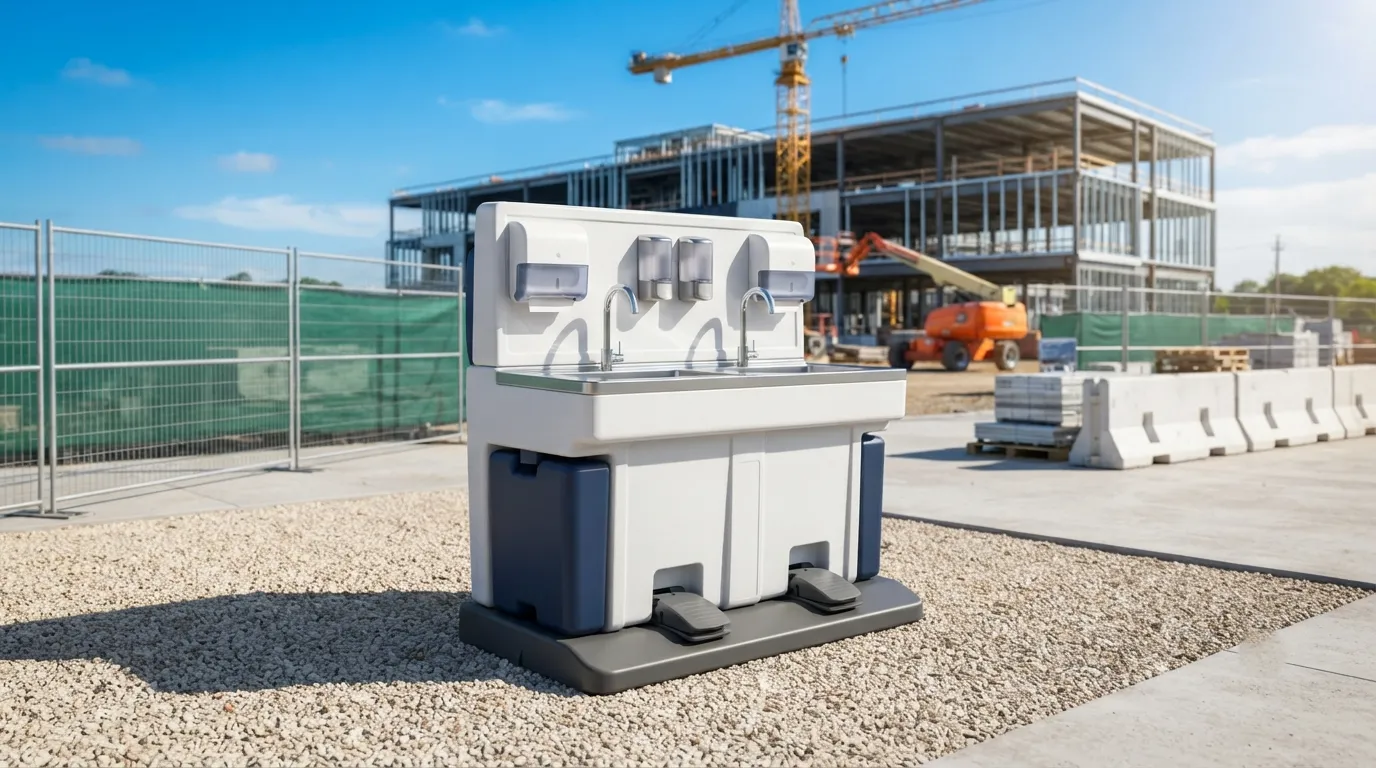
A portable sink rental carries its own fresh water tank, a foot pump or hand crank to push water through the faucet, and a separate gray water tank to catch runoff. There's no plumbing involved. Fill the fresh tank, empty the gray tank when it's full, that's the whole cycle. This matters more than people think: 29 CFR 1910.141(d)(2) requires washing facilities to include soap and towels or a hand-drying device, and hand sanitizer alone doesn't satisfy that. A handwashing station rental or hand sanitizer station rental can supplement a sink, but they're not interchangeable under that standard. Food trucks, agricultural crews and construction sites in Salt Lake City all lean on portable sinks for the same reason: OSHA 1926.51(a)(1) requires an adequate supply of potable water at every place of employment, and a portable sink is often the simplest way to deliver it. Field crews under OSHA 1928.110 need a facility within a quarter mile walk, which is one more reason placement matters as much as plumbing.
How Do Flushable Porta Potties Work?
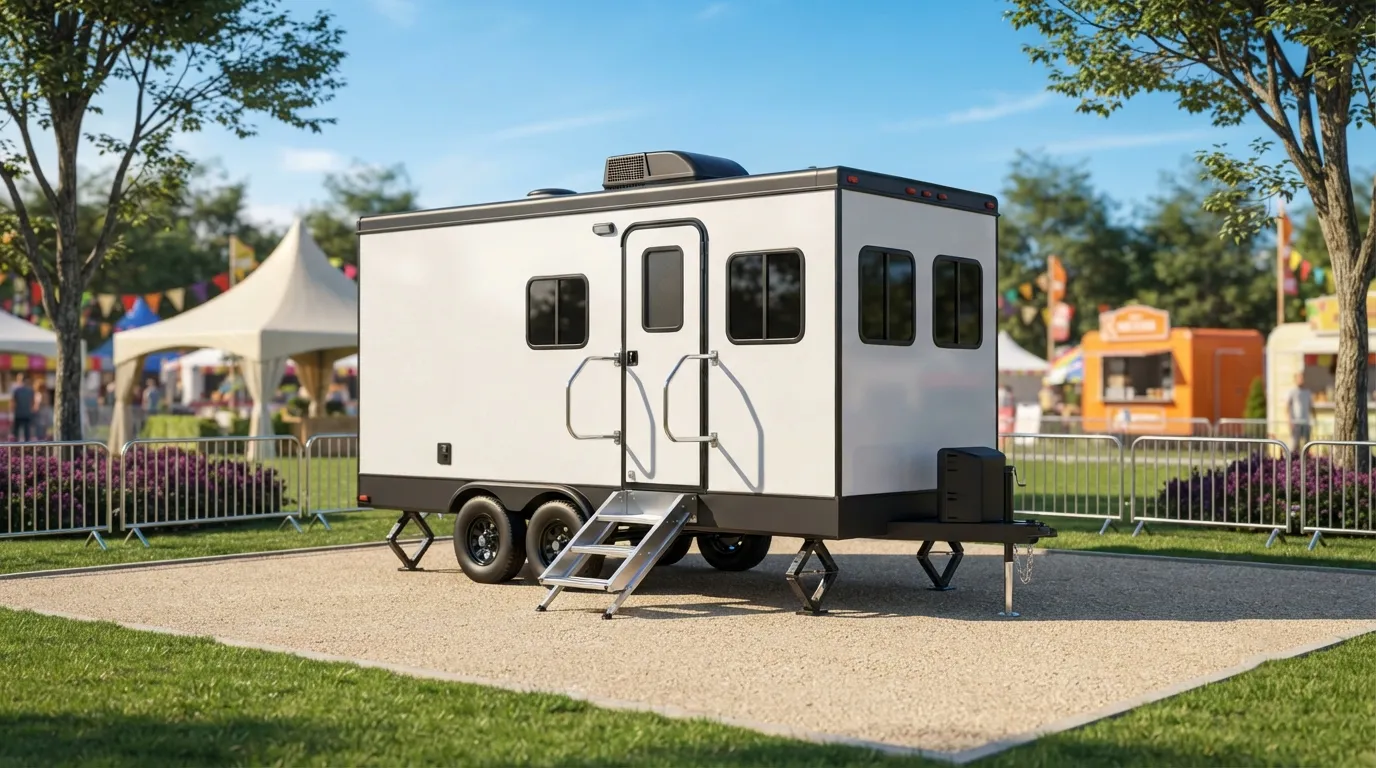
A deluxe flushable porta potty adds a small onboard fresh water tank and a foot-pump or pressurized flush that rinses the bowl into the same holding tank below. It still doesn't connect to a sewer line, it just makes the experience feel closer to a real bathroom. That's the unit most weddings and corporate events request. An ADA accessible porta potty follows the same tank-and-vent principle but adds a wider footprint: ADA Standards section 304.3.1 calls for a 60 inch turning circle inside, and section 404.2.3 sets minimum clear door width at 32 inches. Where units get clustered on a site, ADA Standards section 213.2 requires at least 5 percent of them to be accessible, never fewer than one. A restroom trailer rental, whether it's a 2 stall, 4 stall or 8 stall restroom trailer, takes this further with real plumbing, running water and sometimes climate control, which is why they run a different price tier than a standard unit. For camping trips, a compact camping porta potty works the same tank-and-chemical principle but scaled down for one or two people between dump stops.
Why Does a Construction Worker Running to a Porta Potty Matter for Site Planning?
It's not just a punchline. Site planning depends on units being close enough that a construction worker isn't losing ten minutes each trip. OSHA 1926.51(c)(1) sets the ratio: one toilet for 20 workers or fewer, one toilet seat and one urinal per 40 workers once the crew passes 20, and one per 50 once you hit 200 or more. That ratio drives real decisions on construction site services across Salt Lake City. Placement also has to account for OSHA 1926.56(a) lighting minimums if crews are working early or after dark, and ADA Standards section 405.2 caps any access ramp at a 1:12 slope. For projects with hazardous exposure, OSHA 1926.51(f)(1) requires washing facilities specifically where workers apply paints, coatings, herbicides or insecticides, separate from general toilet counts. A site in South Salt Lake, 7.9 miles south, or Taylorsville, 10.9 miles south, faces the same placement math as a downtown build. Get the layout wrong and you'll see it in complaints fast; the porta potty placement guide walks through clearances and ground stability, tied to ADA Standards section 302.1 requiring stable, slip-resistant surfaces.
| unit | day | week | month |
|---|---|---|---|
| standard | 150 | 200 | 200 |
| ada | 230 | 185 | - |
| deluxe | 300 | 250 | - |
What chemical goes in a porta potty tank?
A blue deodorizing chemical, usually a formaldehyde-free enzyme or quat-based formula, breaks down waste and masks odor between services. It's added at setup and topped off during each pump-out. Homeowners searching "portable toilet chemicals near me" for a septic tank cleaning chemical are usually thinking of a different product; septic additives treat a fixed tank, not a portable unit.
How often does a porta potty get serviced?
ANSI/PSAI Z4.3 sets a weekly baseline for up to 10 users over a standard work week. Busy events or full crews often need two or three visits weekly. Check the how often are porta potties cleaned page for use-based schedules.
Do porta potties need a water hookup?
No. Standard units are entirely self-contained, no water line, no sewer. Deluxe flushable models carry their own small fresh water tank. Restroom trailers are the exception, since they run real plumbing.
How is a septic tank different from a porta potty?
A residential septic tank holds 1,000 gallons or more and gets pumped every 3 to 5 years depending on size and household use. A porta potty tank holds 60 to 70 gallons and gets serviced weekly. See septic pumping service for details.
Can I rent a porta potty for a single weekend event?
Yes. Weekend rates run higher per day than week-long rentals since delivery and pickup costs get compressed into two days. A request a quote call will get you an exact number based on guest count and unit type.
Next step
Get a delivery date
Tell us the address, the dates and the headcount. We size the order and confirm the route.