
Where Should a Porta Potty Go on a Job Site or Yard?
Start with the ground. A standard unit runs about 44 by 48 inches at the base and stands 92 inches tall, so it needs a pad that's flat and firm, not soft dirt that shifts after a spring thaw. ADA Standards section 302.1 calls for surfaces that are stable, firm and slip resistant, and that rule matters even on a private job because a unit that rocks on uneven ground is a liability nobody wants. Keep the door swing clear, since our crews need room to service the tank without climbing over lumber or fencing. If you're setting up temporary fencing around the unit, leave a gap wide enough for the pump hose. On construction sites, OSHA 1926.51(c) sets toilet counts by crew size, so placement has to serve the whole crew, not just the trailer parked closest to the gate. For help sizing the count first, see how many porta potties do I need.
How Close Does the Truck Need to Get for Service?
Our service truck needs a clear path to the unit, usually within reach of a standard hose run, and steep grades or soft shoulders can turn a five-minute pump into a delay for everyone behind you on the route. This is the same logic that applies to roll-off dumpster placement: a dumpster placement permit matters less than whether the truck can back straight in, and a roll-off needs about 60 feet of straight clearance behind it to load and pull away clean. If you're stacking a porta potty rental next to a dumpster and a storage container on the same lot in Salt Lake City, map the truck routes before anything gets dropped, not after. A dumpster placement permit cost varies by lot and by street use, so check with the city before you commit to a curb spot.
Do I Need a Permit to Place a Unit on the Street or Sidewalk?
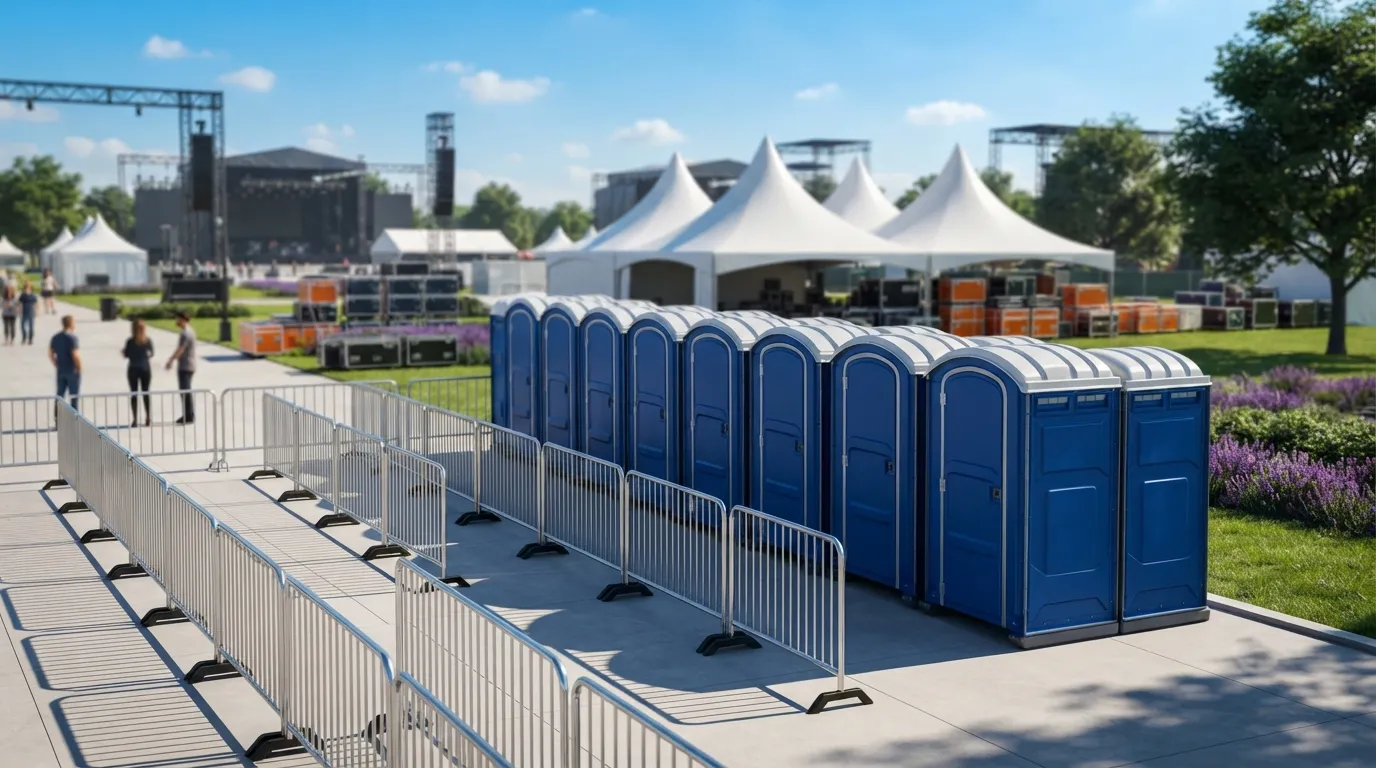
Placement in the public right of way needs confirming with the City of Salt Lake City before you set anything on a sidewalk, curb strip, or street lane. We can tell you what we've seen work on similar sites, but the porta potty permit requirements and any dumpster permit requirements for the same event should come from the city directly. This matters more for event restroom setups downtown than for a fenced job site in South Salt Lake, which sits about 7.9 miles south, or Murray, about 11.6 miles south, where a private lot usually keeps things simpler. If your event pulls a crowd, pair the crowd control barrier rental with a placement plan that keeps foot traffic away from the service side of every unit.
What Rules Apply to ADA Units and Accessible Routes?
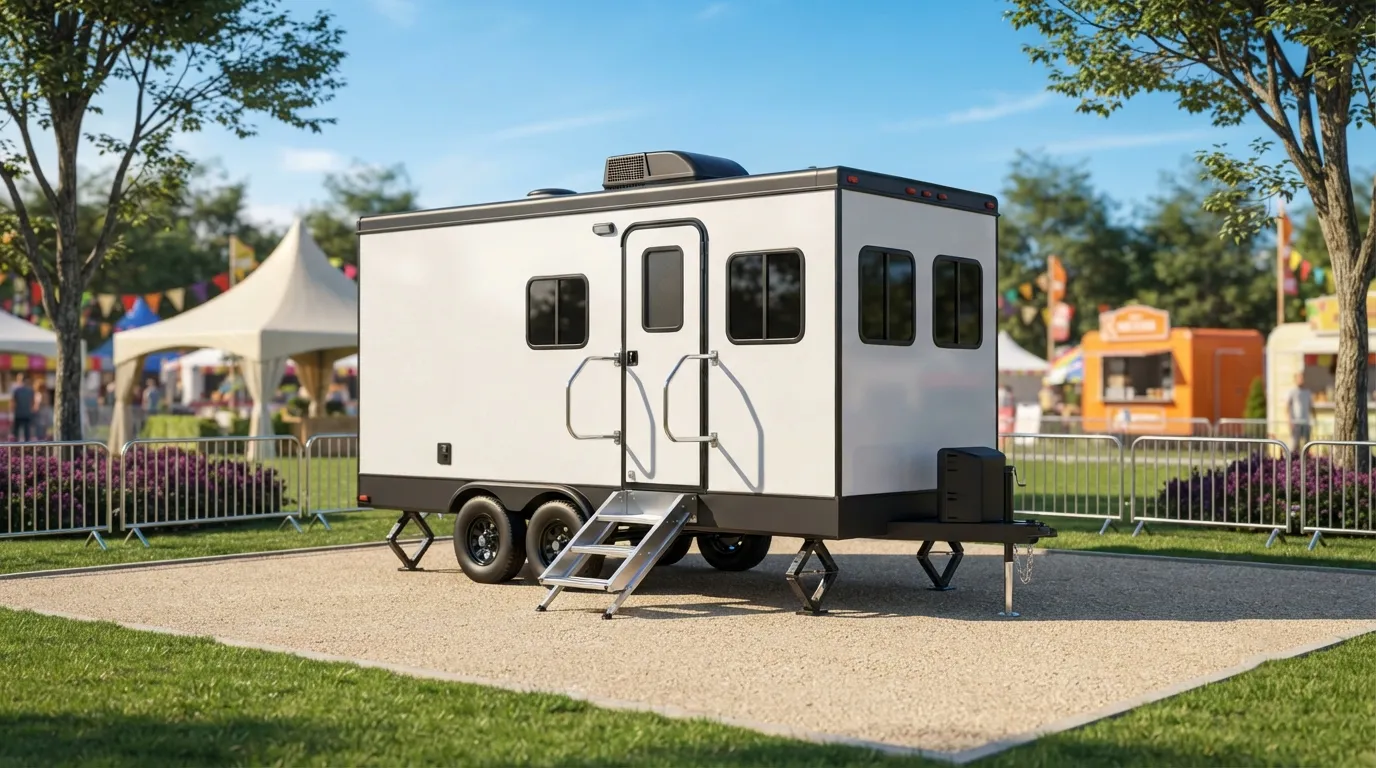
An accessible unit needs a 60 inch turning circle inside or immediately outside the door, per ADA Standards section 304.3.1, plus a door opening of at least 32 inches under ADA Standards section 404.2.3 and a clear route at least 36 inches wide under ADA Standards section 403.5.1. When you cluster standard porta potty rentals, ADA Standards section 213.2 requires at least 5 percent of the cluster, and never fewer than one unit, to be accessible. That means a 12-unit bank at a Salt Lake City festival needs at least one ADA accessible porta potty placed on a stable, level pad with the same 302.1 surface standard applied to every other unit around it. Operable parts on that unit, including the latch, have to meet ADA Standards section 309.4, meaning 5 pounds of force or less and no twisting grip.
Placement Costs and Common Add-Ons
| item | duration | typical price |
|---|---|---|
| standard unit | day | $150 |
| standard unit | week | $200 |
| ADA unit | week | $185 |
| delivery fee | day | $150 |
| dumpster | week | $600 |
Delivery fees shift with distance and access, and a unit placed on a tight downtown lot often costs more to deliver than the same unit dropped at a flat rural site near Bountiful, 9.9 miles northeast, or Taylorsville, 10.9 miles south. If you're comparing porta potty rental cost against a monthly porta potty rental, placement difficulty is often the line item that moves the number, not the unit itself.
Do I need a permit to place a porta potty on my property?
Usually not for a private lot or yard, but sidewalks, street parking, and public right of way need city confirmation first. Check with Salt Lake City before placing anything outside your own fence line. See porta potty permit requirements for what to ask about.
How far from a building should a unit sit?
There's no single number we can hand you here, since it depends on doors, windows, and airflow. Keep it away from entrances and dining areas, and give the service truck a straight approach. Ask us to walk the site before delivery.
Can I place a unit on grass or gravel?
Yes, if the ground is firm and doesn't shift under weight, matching the stable, slip-resistant standard in ADA Standards 302.1. Soft or sloped grass after rain is the most common reason a unit tips. We'll flag bad ground during the site check.
What if my mobile office trailer needs a replacement door for the same site?
That's a maintenance question separate from placement, and mobile office trailer replacement doors are handled through the mobile office trailer rental provider directly. Ask about it when you book the trailer, not the restroom units.
Does a handwashing station need its own placement plan?
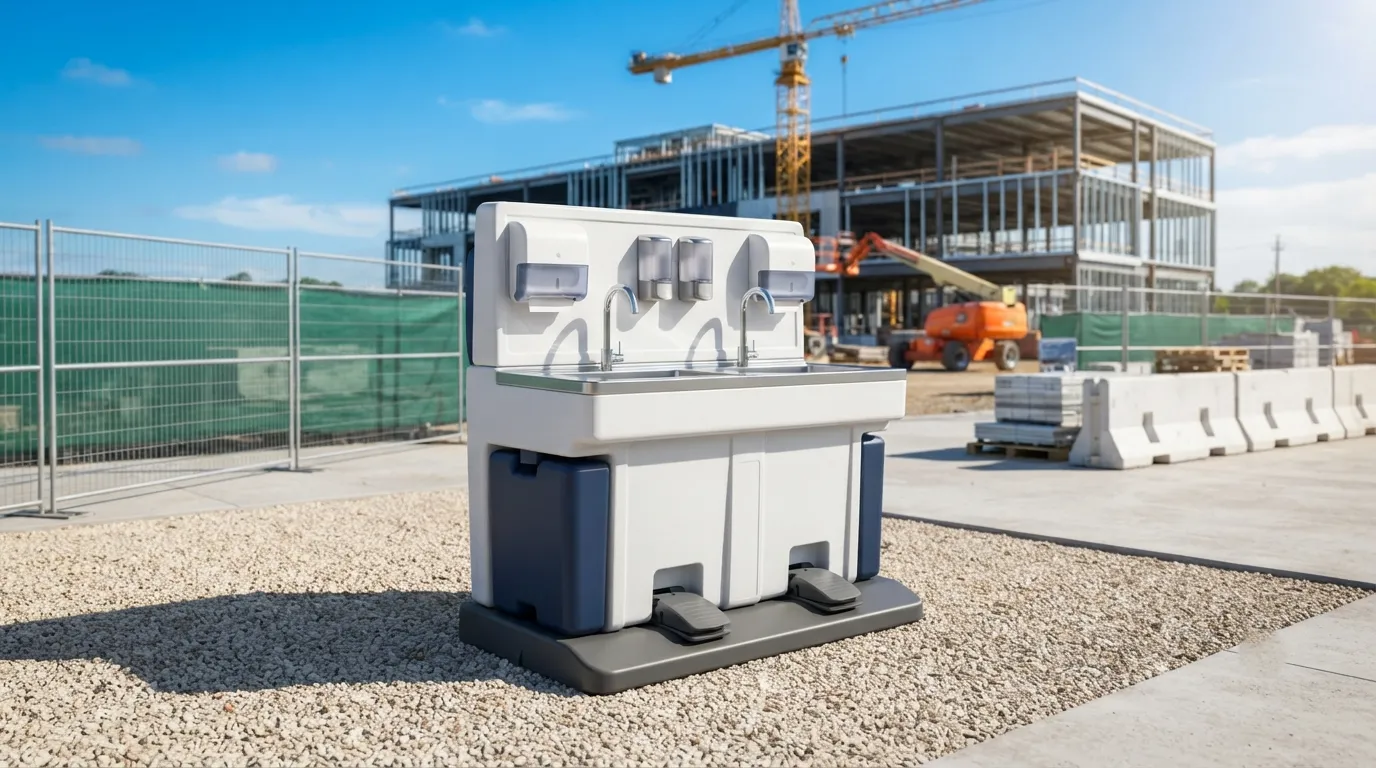
Yes. Under 29 CFR 1910.141(d)2, wash stations need soap and towels, not sanitizer alone, so place them where workers actually pass by. See handwashing station rental for setup near your porta potty cluster.
Next step
Get a delivery date
Tell us the address, the dates and the headcount. We size the order and confirm the route.