
How many porta potties do I need for OSHA compliance?
Start with the headcount, not the site size. 1926.51(c) sets the baseline: 20 workers or fewer needs 1 unit, and the ratio changes as your crew grows past that. A framing crew of 15 outside South Jordan needs one standard porta potty rental. A 60-person job closer to downtown Salt Lake City needs several units, spaced so nobody's walking across an active site to reach one. Our how many porta potties do i need guide breaks the math down by crew size. Duration matters too. A two-week job and a six-month job get sized the same way, but the six-month job usually makes more sense as a monthly porta potty rental rather than repeated short-term orders. If your crew works multiple shifts, don't just multiply units by shift count. Servicing frequency covers overlapping shifts fine under normal use, based on the ANSI/PSAI Z4.3 baseline of one visit per week for up to 10 users across a standard 40 hour week.
What does OSHA say about portable toilet distance requirements?
OSHA's 1926.51(c) sets ratios but doesn't hand you a strict distance number for placement. What it does require is potable water on site under 1926.51(a)(1), and general housekeeping standards under 1926.25 that affect where you can stage a unit without it becoming an obstruction. In practice, placement comes down to keeping units close enough that workers actually use them, on stable ground per ADA Standards 302.1, with a clear approach. If your project also needs an accessible unit, ADA Standards 403.5.1 calls for a 36 inch clear route, and 404.2.3 requires a 32 inch door opening at minimum. Our porta potty placement guide covers grading, anchoring, and pump-truck access, which matters if you're planning septic pumping service or routine tank service on the same site. For most Salt Lake City sites, placement is less about a fixed distance and more about balancing worker access against a driveway or roll-off zone you're already using for a roll-off dumpster rental.
Are Cal OSHA portable toilet requirements different from federal OSHA?
Cal OSHA applies in California, not Utah, so Salt Lake City sites follow federal OSHA under 1926.51(c) instead. Cal OSHA's construction toilet ratios run close to the federal table, but Utah contractors don't need to track a separate state standard here. What does apply locally is the same federal baseline: 1 toilet per 20 workers, scaling up at 40 and again at 200. If your company also runs jobs across state lines, it's worth knowing the rulesets diverge slightly, but for anything built in Salt Lake City, Bountiful, or Taylorsville, 1926.51(c) is the number that governs your unit count. Field crews outside city limits, including agricultural operations, may fall under 1928.110 instead, which sets a separate ratio of one facility per 20 hand-labor employees within a quarter mile walk. That standard shows up more on farm work than commercial builds; see our farm and agricultural restrooms page for specifics.
Do OSHA rules require handwashing stations, not just toilets?
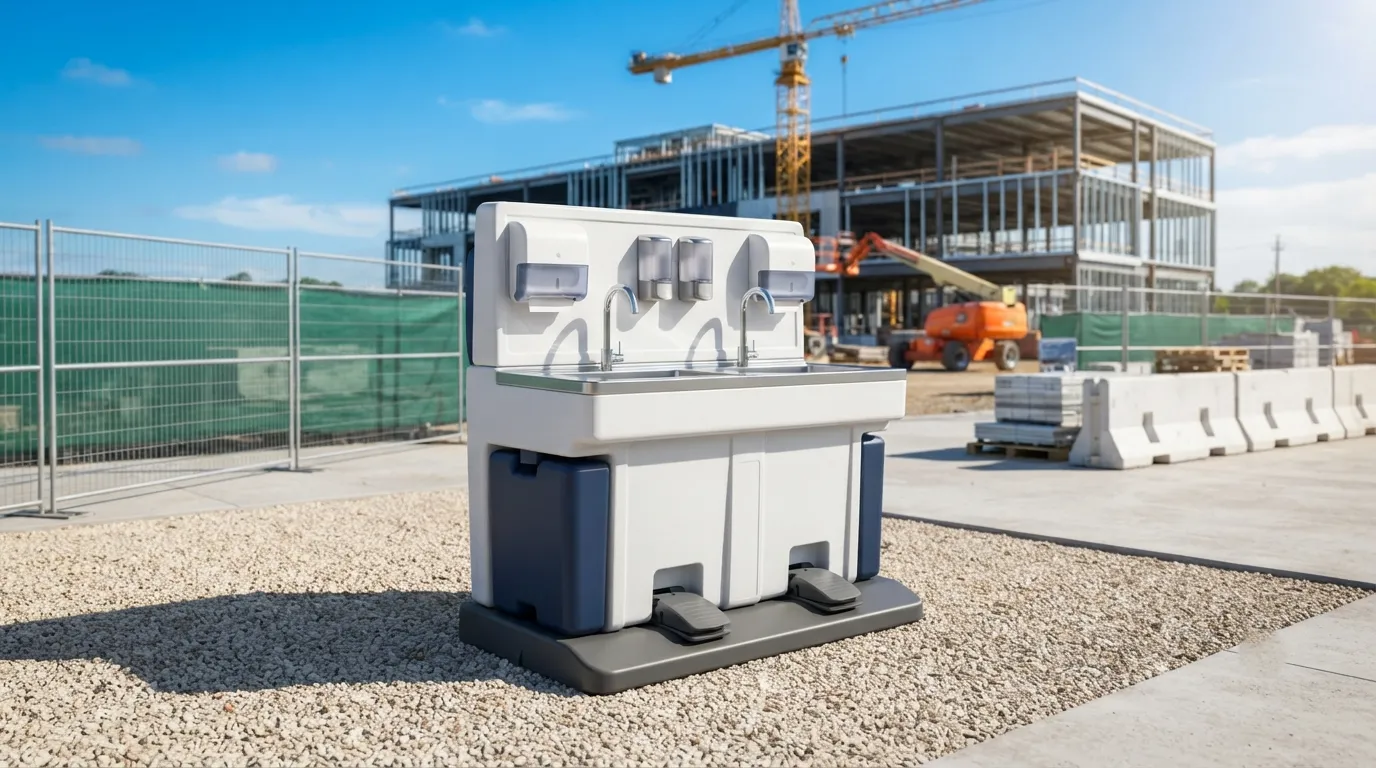
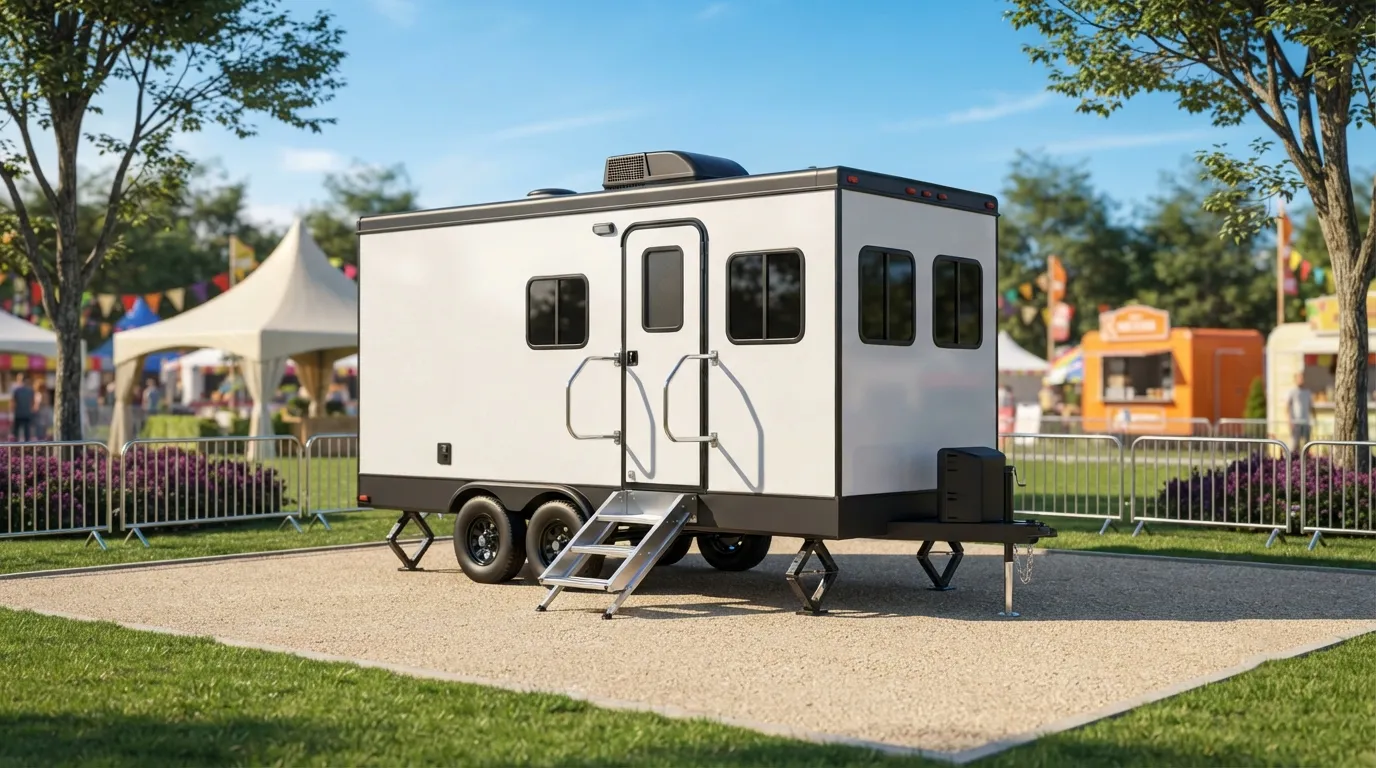
Sometimes, and it depends on the work. General industry washing rules under 29 CFR 1910.141(d)(2) require soap and a way to dry hands, not just sanitizer, wherever washing facilities are provided. Construction sites applying paints, coatings, herbicides or insecticides trigger a specific washing requirement under 1926.51(f)(1), separate from the general toilet count. That's not a blanket handwashing mandate for every job site; it applies to those contaminant contexts specifically. Painting crews and pesticide applicators around Salt Lake City should plan for a handwashing station rental or a portable sink rental alongside their toilets, not a sanitizer stand alone, since sanitizer doesn't satisfy 1910.141(d)(2). For a full breakdown of when handwashing is required versus recommended, see our handwashing requirements page. Sites needing ADA-compliant units should also check ADA Standards 213.2, which requires at least 5 percent of clustered single-user units to be accessible.
Pricing for compliant units varies by duration:
| unit | day | week | month |
|---|---|---|---|
| standard | 100-350 | 130-500 | 125-325 |
| ada | 200-400 | 120-240 | not offered |
Longer jobs get a lower per-day rate. Check porta potty rental cost or porta potty rental per day for a fuller breakdown, and ADA accessible porta potty if your crew needs a unit meeting 304.3.1's 60 inch turning circle.
How many porta potties does OSHA require for a 30-person crew?
At 30 workers you're past the 20-person threshold, so 1926.51(c) puts you in the 1-per-40 tier. Most contractors round up to two units for comfort and servicing overlap, especially on a multi-week job. Talk to Salt Lake City Porta Pros about crew size before ordering.
Does OSHA require a specific distance from the work area?
No fixed number exists in 1926.51(c) itself. Placement should prioritize worker access, stable ground, and clearance for service trucks, not a mandated footage. See our porta potty placement guide for layout specifics.
Is Cal OSHA relevant for a Utah job site?
No. Cal OSHA governs California work sites only. Utah contractors, including those in Salt Lake City, Murray, or West Valley City, follow federal OSHA under 1926.51(c) for toilet ratios and general sanitation.
Do agricultural sites follow different OSHA sanitation rules?
Yes. Field sanitation for hand-labor agricultural work falls under 1928.110, requiring one facility per 20 employees within a quarter mile walk, separate from the construction ratio in 1926.51(c). See farm and agricultural restrooms for details.
Can I rent a storage container alongside porta potties for the same job?
Yes. Many Salt Lake City contractors pair a storage container rental or 20ft storage container with restroom units on the same site, especially for tool security. Ask about combined delivery when you request a quote.
Next step
Get a delivery date
Tell us the address, the dates and the headcount. We size the order and confirm the route.